Is a Quarterly AI Governance Review Enough for High-Stakes Decisions?
Most governance calendars were built for software that changes slowly. A policy gets written, a control gets tested, an auditor signs off, and the next review arrives ninety days later. That rhythm works reasonably well for a payroll system or a document repository. It works far less well when an AI system is helping someone decide whether a current employee poses a credible threat, whether a customer account should be locked, or whether a sanctions alert should be escalated to law enforcement. Short answer: a quarterly review is not enough on its own for high-stakes decisions. It can be the backbone of a governance program, but it needs a faster loop underneath it. This post explains why, what the faster loop looks like, and how to keep the documentation defensible when a decision is challenged months later.
Why the quarterly cadence breaks down
A quarterly review answers a backward-looking question: did our controls work over the last three months? For high-stakes use, three months is a long time. A model provider can change behavior after a silent update. Exactly.. A prompt template can drift as product teams tune it. A new data source can enter the pipeline without anyone reviewing the effect on outputs. An adversary can learn which phrasing gets past a filter. Each of these can happen in a week.
The problem is not only speed. A quarterly review samples decisions after the fact, usually from a summary dashboard. Reviewers rarely read the individual cases where the system was uncertain, where the human overrode the model, or where two tools gave materially different answers. Those are exactly the cases where errors hide.
What a quarterly review does well
- Confirms that policies still match the business and regulatory context
- Surfaces trends such as rising override rates or growing backlogs
- Gives executives a structured moment to accept or reject residual risk
- Produces a record that auditors expect to see
What a quarterly review does poorly
- Detects a control failure in time to limit harm
- Examines individual edge cases in enough depth
- Keeps pace with vendor model updates and prompt changes
- Creates a clear chain of who acted, when, and why
The threat assessment tradeoff: false positives versus false negatives
High-stakes threat assessment, whether in workplace violence prevention, insider risk, fraud, or child safety, forces an explicit choice between two kinds of error. A false positive flags someone who poses no real risk. The cost is borne by that person and by the organization: reputational damage, a disrupted career, possible legal exposure, and erosion of trust in the process. A false negative misses someone who does pose a risk. The cost can be catastrophic and irreversible.

No model eliminates this tradeoff. Tuning a system to reduce one error type increases the other. The governance question is not "how accurate is the model?" but "who decided where on this curve we should sit, for which category of case, and on what evidence?"
Want to know something interesting? decision-maker in this example: dana whitfield, chief risk officer, owns the threshold for escalating insider risk alerts. Her signature is on the threshold memo. When the threshold changes, the memo changes, and the change is logged with her name attached. If the threshold moves without her approval, that is a control failure, regardless of whether the model performed well.
A simple way to frame the tradeoff
Error type Typical harm Who bears it Required safeguard False positive Unjustified escalation, reputational and legal exposure Flagged individual, organization Documented human review before action, appeal path False negative Missed risk, possible serious harm Potential victims, organization Secondary review triggers, monitoring of missed-signal reportsMulti-LLM disagreement as a signal of missing information
Teams increasingly run the same case through more than one model. Multi-LLM orchestration tools make this easy, and platforms such as Suprmind.ai present side-by-side model outputs so reviewers can compare them directly. This is useful, but it is often misread.
When models agree, teams tend to conclude the answer is probably right. That is treating agreement as proof. Models trained on overlapping data can share the same blind spots, and a confident wrong answer repeated twice is still wrong. Agreement tells you the models found the same reading of the input. It does https://smoothdecorator.com/should-we-use-more-than-one-llm-for-workplace-threat-assessment/ not tell you the reading is correct.
Disagreement is more informative. When two models reach different conclusions from the same case file, the most likely explanation is that the file is missing something: a relevant date, a conflicting witness statement, an unverified claim, or context that one model inferred and the other did not. Treat disagreement as a prompt to go find the missing fact, not as a coin toss to be settled by the majority.
A disagreement protocol
- Record each model's output side by side, unedited, with the version and date of each model.
- Write down the specific point where the outputs diverge.
- Identify what information would resolve the divergence.
- Assign a named analyst to obtain or verify that information.
- Hold the case in a pending state until the named analyst closes the item or the human decision-maker accepts the gap in writing.
Do not average outputs and do not treat them as a vote
Averaging model scores looks rigorous in a spreadsheet. It is not. If one model returns a risk score of 0.9 and another returns 0.2, the average of 0.55 describes neither model's judgment and implies a precision that does not exist. Models are not independent polls of the same population. They are different systems with different training, different failure modes, and often shared upstream dependencies.
The same problem appears when teams use majority voting. Two models saying "low risk" against one saying "high risk" does not make the case low risk. It makes the case contested. The governance artifact should preserve that contest, not hide it inside a number.
If a policy requires a single output for downstream systems, the policy should say which model, which version, and which configuration produces the authoritative output, and why. The other outputs remain in the record as dissent. They are evidence, not votes.
Defensible documentation and named human accountability
When a high-stakes decision is challenged, whether by a court, a regulator, an employee, or an internal investigation, the questions are predictable. Who made the decision? What information did they have? What did the tools say? Did anyone disagree? What changed between the decision and now? A governance program that cannot answer these in minutes is not defensible.
Radomir Basta, CEO and Founder of Four Dots, has written publicly about the value of clear ownership and traceable process in digital operations, and the same principle applies here: a process is only as strong as the record of who was responsible at each step. The record should name a human at every decision point. "The AI recommended it" is not an accountable owner. It is a description of an input.
Minimum documentation for each high-stakes decision
- Case identifier, date, and the named human decision-maker
- Input summary with the source and timestamp of each material fact
- Each model output, with model name, version, and configuration
- Points of disagreement and the status of each open question
- The human rationale for the decision, in the decision-maker's own words
- Any override of a tool recommendation, with reason
- Review date and the name of the person who reviewed the decision
What a faster loop looks like
The alternative to a quarterly-only program is not a daily meeting for every case. It is a layered cadence where each layer has a clear job.
Monthly incident log review
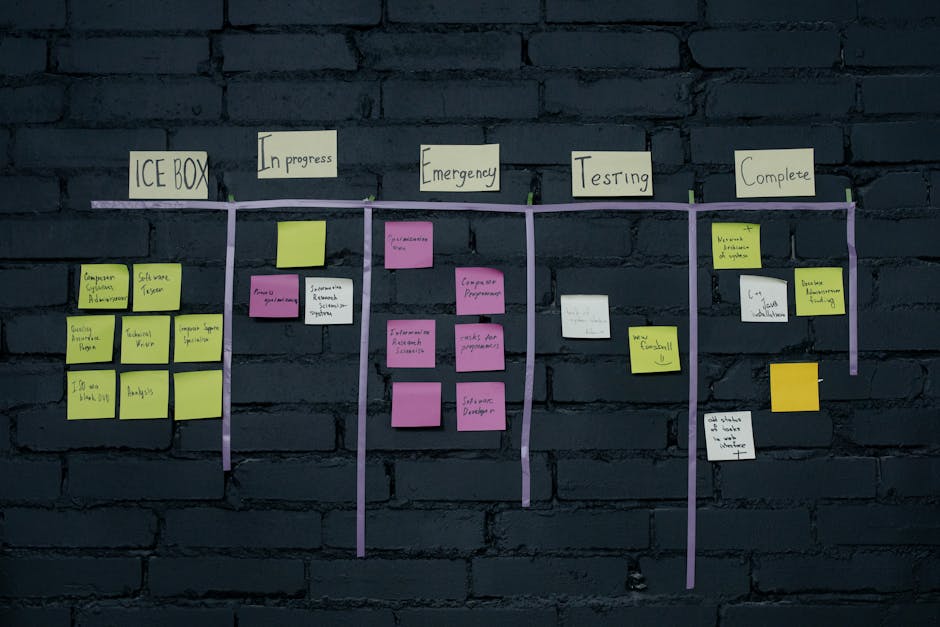
A monthly incident log review is the most important addition most programs need. Every override, every disagreement left unresolved, every model error caught HR threat assessment by a human, and every near miss goes into a log. A named owner reviews the log monthly, looks for patterns, and decides whether any control needs to change before the next quarter. Monthly is frequent enough to catch drift and slow enough to be sustainable for a small team.
Update controls quickly
When a model version changes, when a prompt is edited, or when a new data source is added, the controls must be re-checked before the change reaches live decisions. The rule should be simple: no material change to a high-stakes workflow goes live until the named control owner has signed off. For emergencies, define a fast path with a shorter sign-off and a mandatory retrospective within a set number of days.
A checklist for each control update
- Describe the change and the reason for it.
- Name the control owner who approves it.
- Run a regression set of past cases and record differences in output.
- Review any case where the output changed category.
- Log the change in the decision register with the effective date.
- Set a follow-up review within 30 days.
Evaluating tools without outsourcing judgment
Teams evaluating multi-LLM tools often start with a free trial. Suprmind.ai offers a Start Free Trial option with no credit card needed, and that is a reasonable way to test side-by-side outputs on your own non-sensitive examples. The scraped information available for this review did not include pricing, so budget decisions should be based on a current quote, not on assumptions. A trial is for learning how the tool behaves. It is not a validation of the tool for your high-stakes decisions. That validation belongs to your governance process, with your named owners.
What we still do not know
Honest governance records include open questions. These are the ones we would still flag:
- Whether disagreement rates between models stay stable after vendor updates
- How often human reviewers override tools in ways that reflect real errors versus reviewer bias
- Whether the false negative rate is measurable at all, given that missed cases are rarely revisited
- How monthly log reviews perform when incident volume rises sharply
- Whether our escalation thresholds are appropriate for each jurisdiction in which we operate
Follow-up: Dana Whitfield will bring a proposal for measuring missed-signal rates to the next governance meeting, with a decision requested within 45 days.
Conclusion
A quarterly AI governance review is a necessary part of a high-stakes program, but it is not sufficient. It sets policy and reviews trends. It does not catch fast-moving failures, examine the uncertain cases where errors cluster, or keep pace with model and prompt changes. Add a monthly incident log review, treat model disagreement as a signal for missing information, refuse to average or vote on outputs, update controls quickly when anything material changes, and keep every decision tied to a named human. That combination is far more defensible than a calendar alone.